Cart
0
Your items are reserved for the next
15:00
minutes!


Most people assume privacy is something that naturally exists. You close the hotel room door. You lock your Airbnb. You walk into your office. End of story.
At least that's what we like to believe.
The reality is that privacy isn't guaranteed. And in recent years, reports of hidden cameras being discovered in hotels, holiday rentals and other private spaces have made more people question something they never used to think about:
How private is a private space, really?
For many people, the concern isn't just about being recorded. It's the feeling of not knowing. And that uncertainty can be surprisingly powerful.
Most fears have something in common: uncertainty. It's why people double-check that they've locked the front door. It's why unfamiliar noises at night sound louder than they really are. And it's why the idea of a hidden camera can be so unsettling. The camera itself isn't always the biggest issue. The real problem is the possibility that it could be there without anyone noticing.
When people stay in a hotel room, Airbnb or rental property, they expect a certain level of privacy. Finding out that assumption might be wrong can completely change how they feel in that environment.
Many travellers describe the same experience:
The concern isn't necessarily based on evidence. It's based on uncertainty.
Modern surveillance devices have become incredibly small.
Some hidden cameras can be concealed inside:
Because many devices are designed to blend into everyday surroundings, they can be difficult to spot with a simple visual inspection. That's one reason why reports involving hidden cameras often surprise people. Most assume they would immediately notice something suspicious. In reality, many hidden devices are specifically designed not to attract attention.
While the vast majority of hotels and holiday rentals are perfectly legitimate, taking a few moments to inspect a room can provide extra peace of mind.
Pay attention to objects that seem out of place or positioned in unusual locations.Items facing beds, bathrooms or changing areas deserve additional attention.
Some of the most frequently discussed locations include:
Again, most will be completely harmless. The goal is simply to be aware.
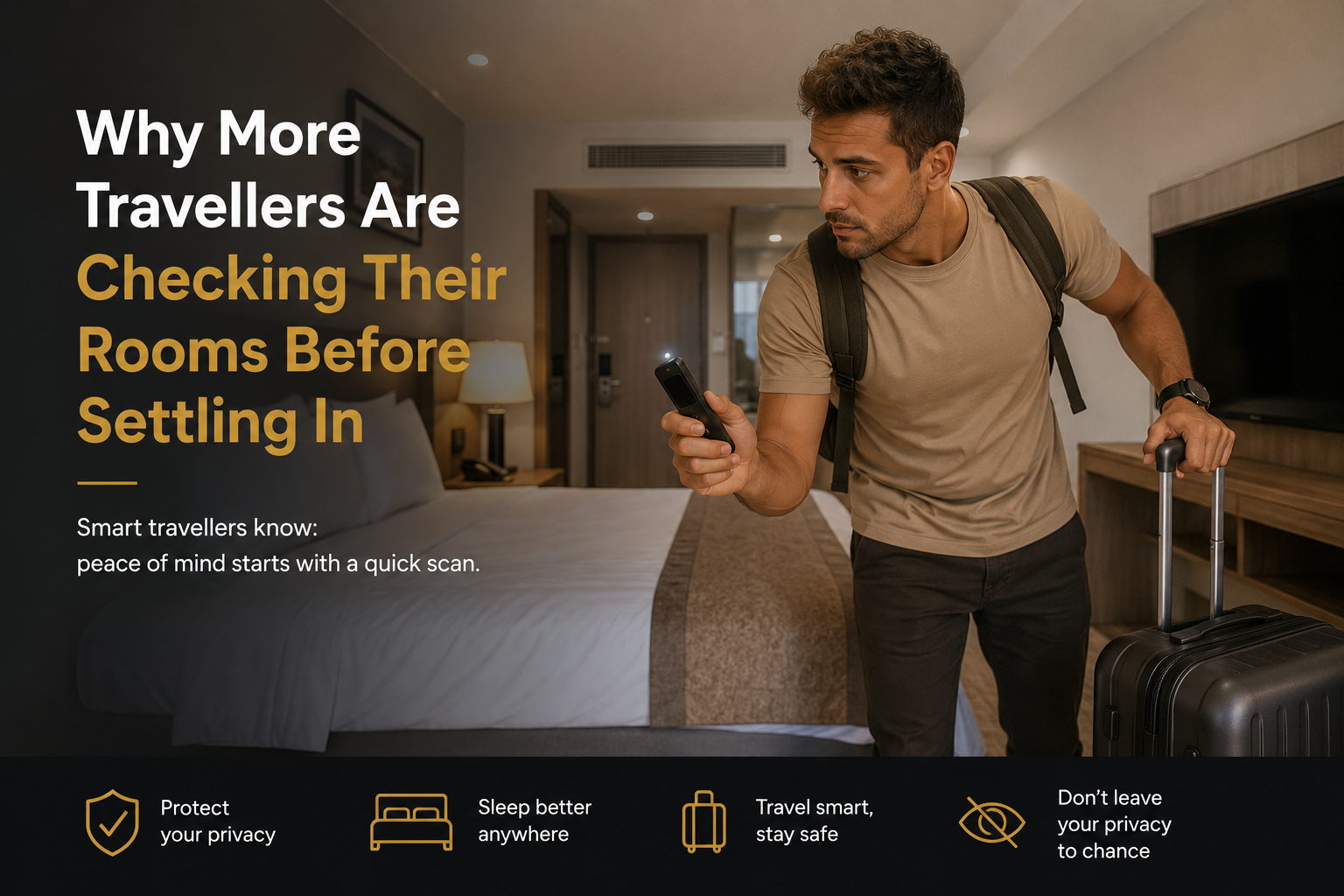
Many travellers now use dedicated detection devices to quickly scan a room.
Rather than relying on guesswork, these tools can help identify hidden camera lenses, wireless signals and GPS tracking devices within seconds. For people who travel regularly, it has become part of their arrival routine.
A few years ago, carrying a hidden camera detector would have sounded unusual.
Today, attitudes are changing.
People routinely carry:
Privacy tools are gradually becoming part of that same category.
Not because everyone expects something bad to happen. But because checking takes very little effort and can provide reassurance. Many users describe the biggest benefit as simple peace of mind. A quick scan removes uncertainty. And once uncertainty is gone, people can focus on enjoying their trip.
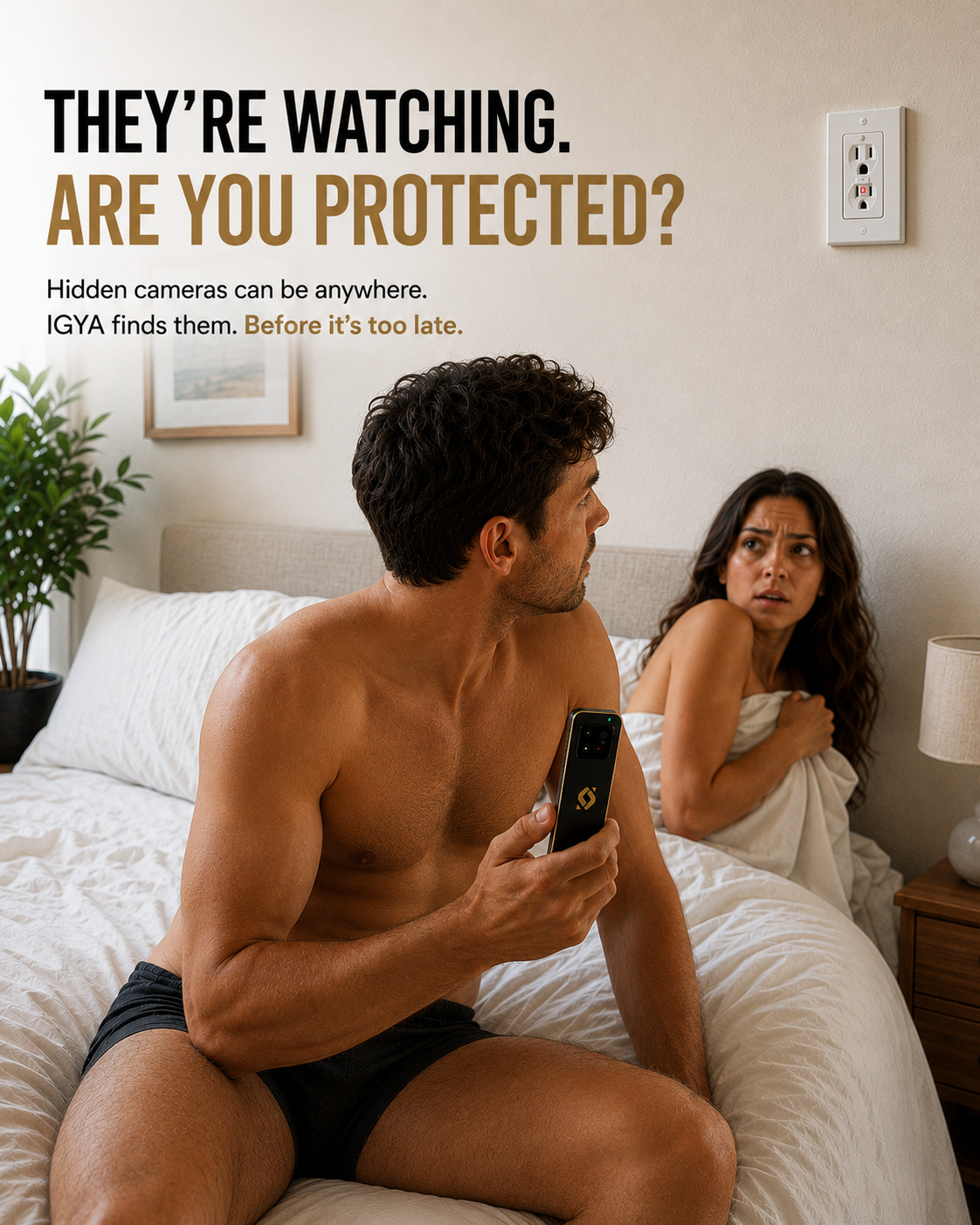
The IGYA Intelligent Detector is designed to help identify several common forms of hidden surveillance.
Depending on the environment, it can assist with detecting:
The device is compact, rechargeable and easy to carry in a backpack, suitcase or laptop bag. No technical experience is required. Simply switch it on and perform a quick scan of the room. For many users, the simplicity is one of the biggest advantages.
When people hear the word privacy, they often think about security. But privacy affects much more than that. Privacy influences how comfortable we feel. How well we sleep. How relaxed we are in unfamiliar environments and how much control we feel we have over our personal space. That's why hidden surveillance feels so intrusive.It's not just about a device. It's about losing the feeling that a space belongs to you.
Yes. Some hidden cameras store recordings locally and do not require an internet connection to operate.
Most hotels are safe, but hidden cameras have been discovered in hotels, holiday rentals and other accommodation around the world.
Many modern detection devices can help identify GPS tracking signals and hidden tracking devices.
Most modern detectors are designed for everyday users and can typically be operated with minimal setup.
The most common reason is peace of mind. A quick scan can help users feel more confident about the privacy of their surroundings.
Privacy shouldn't rely entirely on trust.
Whether you're staying in a hotel, booking an Airbnb, travelling for work or simply value your personal space, knowing how to check your surroundings can provide an extra layer of confidence.
Most people hope they'll never need a hidden camera detector. But for many, having the ability to check is enough.Because sometimes peace of mind comes from knowing, not guessing.