Cart
0
Can Hidden Cameras Work Without WiFi? What Most People Get Wrong
One of the biggest misconceptions about hidden cameras is surprisingly simple:
"If I disconnect the WiFi, the camera won't work."
Unfortunately, that's not always true.
In fact, many people searching for hidden cameras focus entirely on internet connections while overlooking how modern surveillance devices actually operate.
Understanding how hidden cameras work is one of the easiest ways to improve your privacy and recognise potential risks before they become problems.
Let's separate fact from fiction.
Myth #1: Hidden Cameras Need WiFi To Record
This is probably the most common misunderstanding.
Many hidden cameras do use WiFi.
But many don't.
Some devices record footage directly onto a memory card installed inside the camera itself.
This means the camera can continue recording even when:
- WiFi is unavailable
- The internet is disconnected
- Mobile signals are weak
- The property has no network connection at all
In these situations, footage can be viewed later by simply removing the memory card.
Reality
A hidden camera can record perfectly without being connected to the internet.
Myth #2: No Flashing Light Means No Camera
People often expect cameras to have obvious indicators.
A blinking LED.
A flashing light.
A visible recording signal.
Modern surveillance devices are specifically designed to avoid attracting attention.
Many hidden cameras operate without any visible indicators whatsoever.
That's one reason they remain hidden for so long.
Reality
The absence of lights doesn't mean the absence of surveillance.
Myth #3: Hidden Cameras Are Easy To Spot
Most people believe they would immediately notice a camera if one were present.
That's understandable.
After all, cameras seem obvious.
The reality is very different.
Modern devices are often disguised inside:
- Smoke detectors
- USB chargers
- Alarm clocks
- Motion sensors
- Air purifiers
- Wall outlets
Many contain lenses only a few millimetres wide.
Reality
The most effective hidden cameras are designed to blend into everyday surroundings.
Myth #4: Hidden Cameras Only Exist In Hotels
Hotels often receive the most attention because they're familiar to travellers.
But hidden cameras have been discovered in many different environments.
Including:
- Airbnbs
- Holiday rentals
- Shared accommodation
- Offices
- Bathrooms
- Changing rooms
- Private residences
The issue isn't limited to one type of location.
Reality
Any place that offers privacy can potentially become a target for surveillance.
Myth #5: Covering The Camera Solves Everything
Some travellers cover suspicious objects with towels or clothing.
While this may block a camera's view, it doesn't answer the bigger question:
Is the object actually a camera?
And if so, what else is present?
Many devices combine cameras with:
- Wireless transmitters
- Audio recording functions
- GPS technology
Reality
Identifying a device is always more effective than simply covering it.
So How Do Hidden Cameras Actually Work?
Most hidden cameras fall into one of three categories:
Local Recording Cameras
These store footage directly on an internal memory card.
No internet required.
WiFi Cameras
These connect to a local wireless network and allow remote viewing.
Cellular Cameras
These use mobile data networks to transmit footage.
Similar to how a smartphone operates.
Each type presents different privacy concerns.
Which is why relying solely on internet-related checks can be misleading.
Why Detection Has Become More Important
As technology becomes smaller and cheaper, surveillance devices continue to become harder to identify visually.
A camera that once required significant equipment can now fit inside a charging adapter.
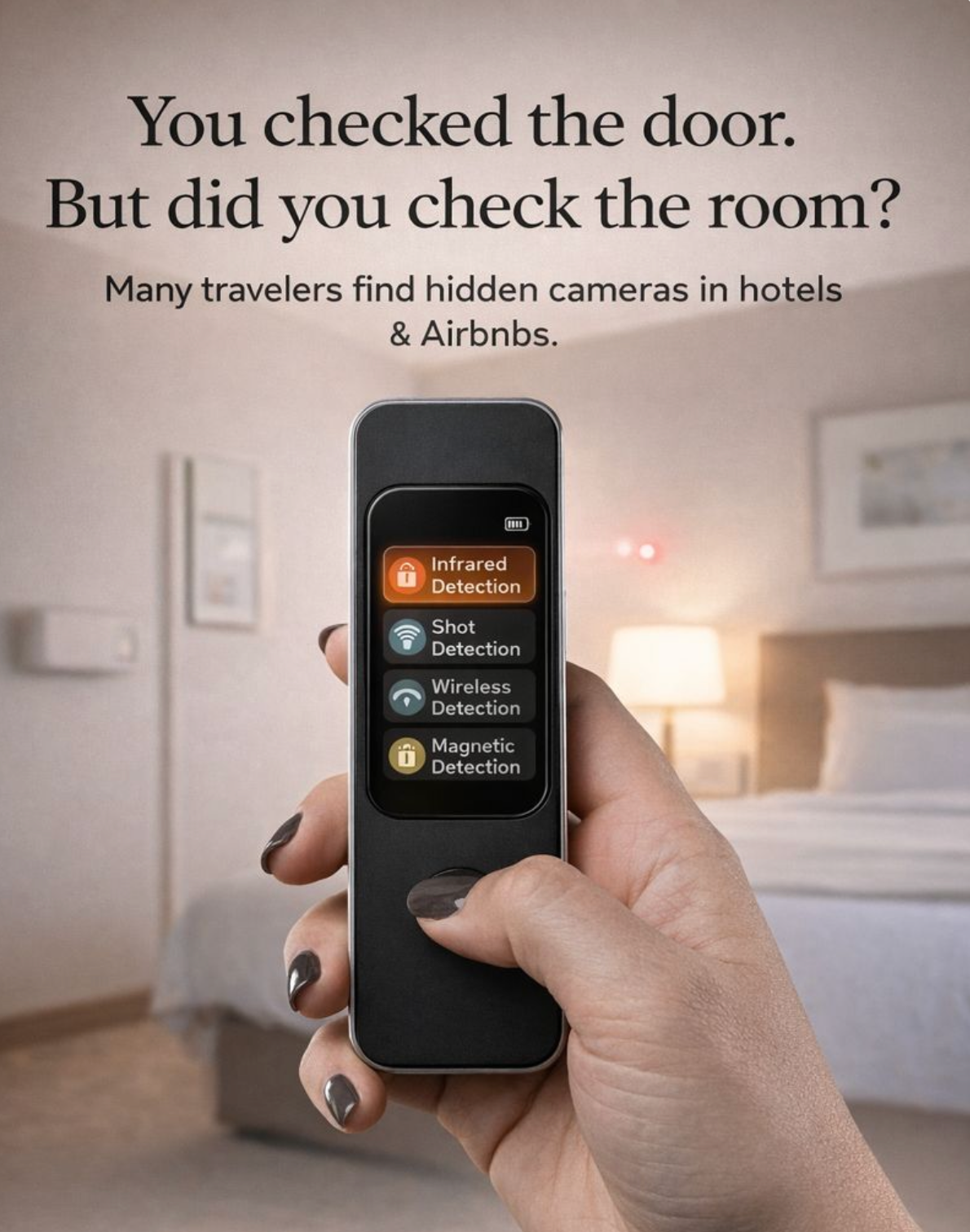
This is one reason why many travellers and privacy-conscious individuals use dedicated detection tools.
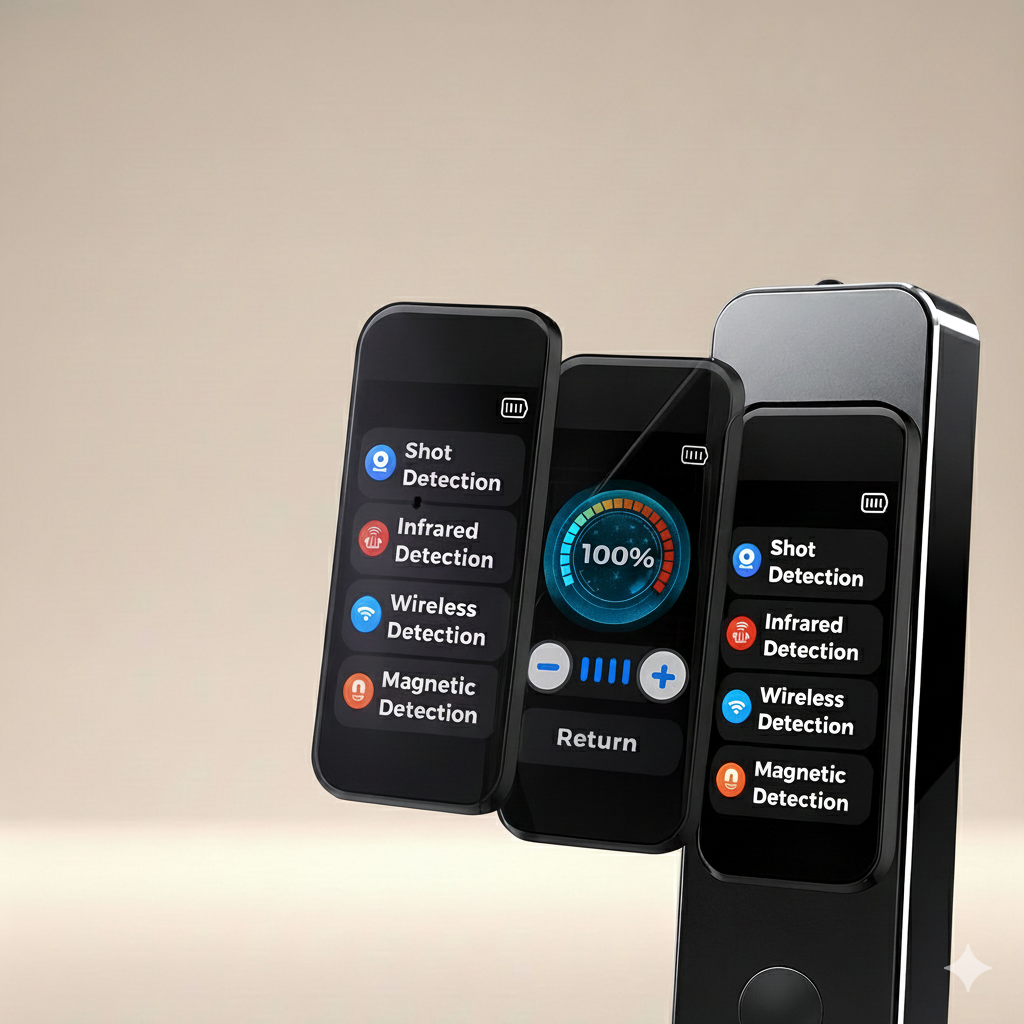
Modern hidden camera detectors can help identify:
✔ Hidden camera lenses
✔ Wireless camera signals
✔ GPS trackers
✔ Active surveillance devices
The IGYA Intelligent Detector was designed specifically for this purpose, allowing users to quickly verify their surroundings before settling into a room.
The Real Question Isn't WiFi
When people ask:
"Can hidden cameras work without WiFi?"
They're usually asking a bigger question.
"How can I know if I'm being recorded?"
That's where awareness matters.
Understanding how surveillance devices operate makes it easier to recognise potential risks and take practical steps to protect your privacy.
Final Thoughts
Hidden cameras don't need WiFi to create privacy concerns.
Some record locally.
Some transmit wirelessly.
Some use mobile networks.
The technology may differ, but the principle remains the same:
You can't rely on assumptions.
Whether you're staying in a hotel, checking into an Airbnb or simply protecting your personal space, knowing how modern surveillance devices work gives you an important advantage.
Because privacy isn't about fear.
It's about being informed.