Cart
0
Your items are reserved for the next
15:00
minutes!


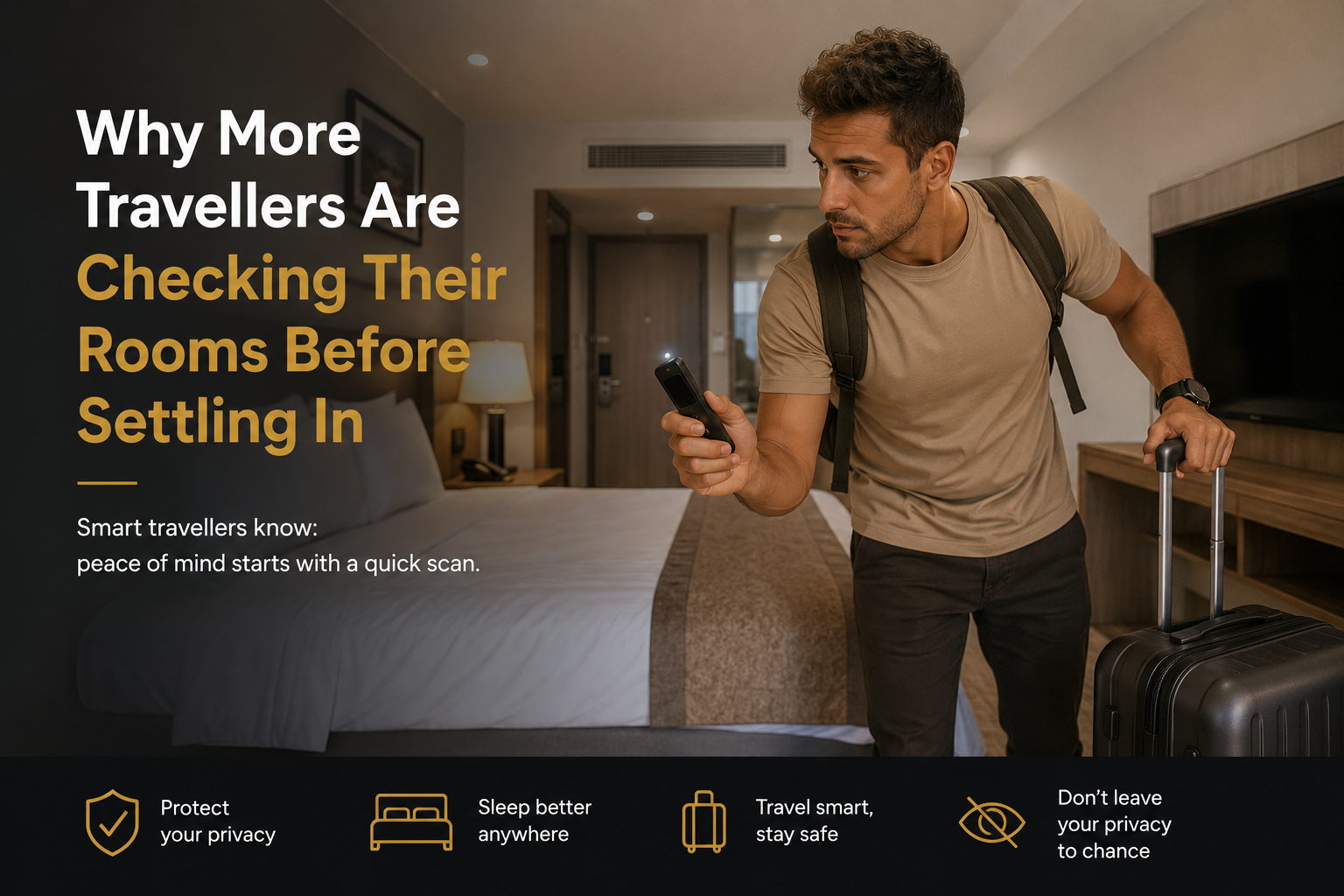
At first glance, most hidden camera detectors look surprisingly similar.
Small.
Portable.
Usually black.
A few buttons.
A flashing light.
And a list of features printed on the packaging.
For many buyers, that creates an obvious assumption:
"If they all do the same job, why spend more on one detector than another?"
It's a fair question.
But when it comes to privacy and surveillance detection, appearance can be misleading.
The reality is that not all hidden camera detectors work the same way—and not all of them detect the same threats.
Understanding the difference can help you avoid a false sense of security.
It's trusting the wrong one.
Many people buy a detector for a simple reason:
They want certainty.
They're staying in a hotel.
Checking into an Airbnb.
Travelling for business.
Or simply protecting their privacy at home.
The goal isn't to own a gadget.
The goal is to know whether a room is safe.
That's where quality matters.
Many low-cost detectors rely on a single detection method.
That means they may only identify:
Certain wireless signals
Specific frequencies
Limited camera types
The challenge is that modern surveillance devices vary significantly.
Some transmit wirelessly.
Some record locally.
Some remain inactive until motion is detected.
Others use technologies that basic detectors struggle to identify.
As surveillance technology evolves, detection methods need to evolve as well.
Imagine arriving at a hotel room.
You switch on a detector.
It doesn't find anything.
You assume the room is safe.
But what if the detector simply wasn't capable of identifying the device?
That's the risk.
The biggest danger isn't necessarily a hidden camera.
It's believing you've checked when the equipment wasn't capable of performing a thorough inspection.
People who travel regularly often focus on three things:
The more ways a detector can identify surveillance devices, the better.
Many experienced users prefer devices that combine:
Lens detection
Wireless signal detection
GPS tracker detection
Rather than relying on a single approach.
A detector is only useful if people actually use it.
Complicated devices often end up forgotten in luggage.
The best detectors are designed for everyday users.
Consistency matters.
A detector should provide dependable results in different environments.
Whether you're in:
Hotels
Airbnbs
Offices
Rental properties
A frequent traveller once described buying a low-cost detector online before an international trip.
The device looked impressive.
The product page promised advanced protection.
But when it arrived, it was difficult to understand and produced constant false alerts.
Eventually, the traveller stopped using it altogether.
Months later, they upgraded to a more reliable detector designed with multiple detection methods.
The difference wasn't just technical.
It changed behaviour.
Instead of leaving the detector in a drawer, they began checking rooms regularly.
And that's the real value of a privacy tool:
Not owning it.
Using it.
Before buying any hidden camera detector, ask yourself:
Hidden cameras aren't the only privacy concern.
GPS trackers and wireless surveillance devices are increasingly common.
If a device feels confusing, there's a good chance it won't be used consistently.
The best privacy checks are the ones that actually happen.
A detector should make checking easier, not more complicated.
Modern privacy threats aren't limited to one technology.
That's why many travellers now prefer devices that can help identify:
✔ Hidden camera lenses
✔ Wireless surveillance signals
✔ GPS trackers
✔ Active monitoring devices
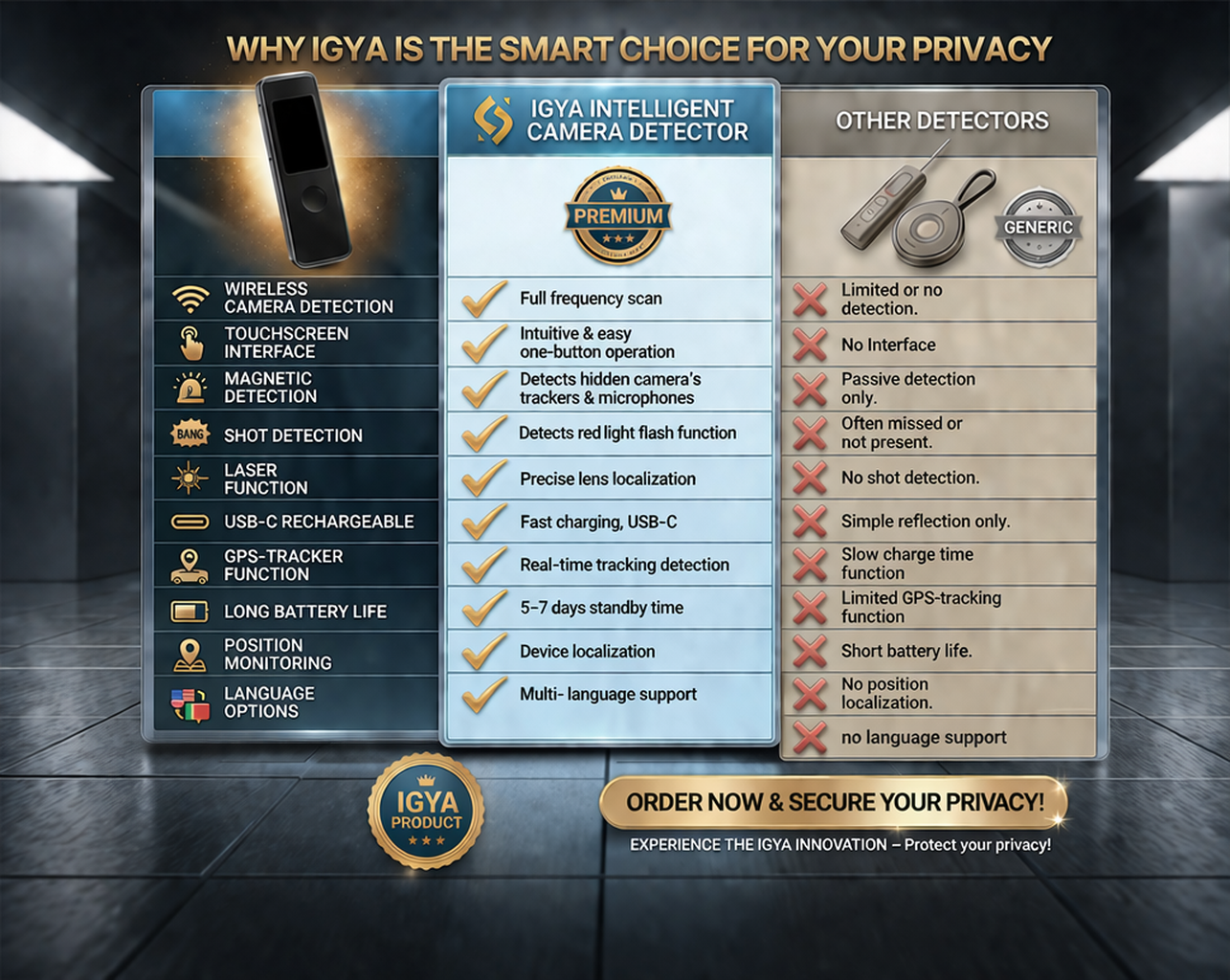
The IGYA Intelligent Detector was designed with this in mind.
Rather than focusing on a single detection method, it combines multiple technologies to help users perform a more complete privacy check.
The result is a process that takes only seconds and requires no technical expertise.
When comparing detectors, many people ask:
"Which one is cheaper?"
A better question might be:
"Which one would I trust if my privacy depended on it?"
Because when it comes to surveillance detection, the goal isn't finding the lowest price.
The goal is confidence.
Not all hidden camera detectors are created equal.
Some offer basic functionality.
Others are designed to provide a more complete picture of what's happening around you.
The difference isn't always visible from the outside.
But when privacy matters, it's often the difference that counts.
Because peace of mind doesn't come from owning a detector.
It comes from trusting the one you're using.