Cart
0
Your items are reserved for the next
15:00
minutes!


Most people think privacy is about hiding things.
It isn't.
Privacy is about certainty.
And certainty is something the human brain values far more than most people realise.
Imagine this.
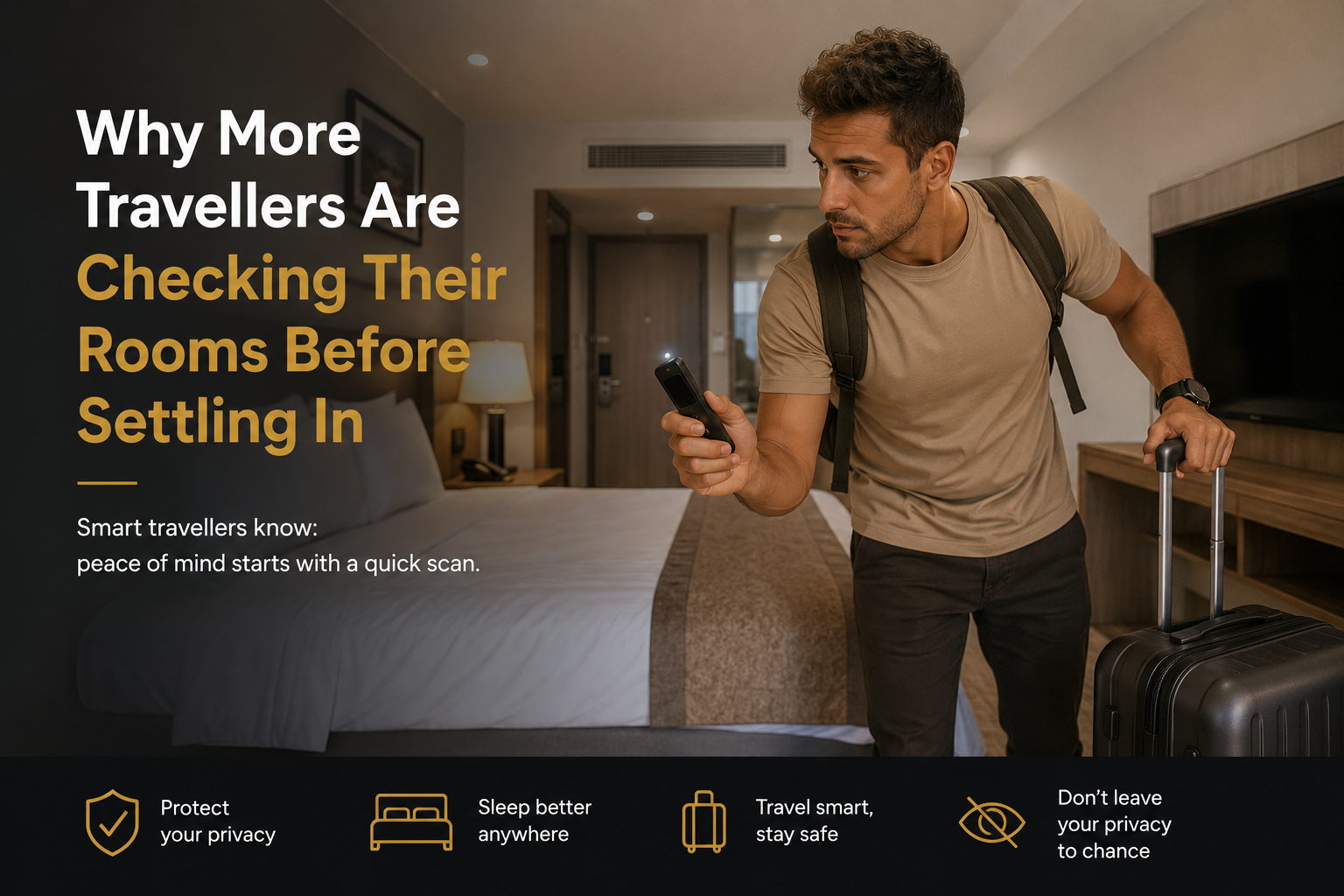
You're staying in a hotel room.
The room is clean.
The bed is comfortable.
The door is locked.
Nothing appears unusual.
Now imagine someone asks a simple question:
"Are you absolutely sure nobody is watching?"
Suddenly, the room feels different.
Nothing changed physically.
The furniture is exactly where it was before.
The walls haven't moved.
The room is identical.
And yet something feels different.
That's the power of uncertainty.
Psychologists have studied uncertainty for decades.
One finding appears repeatedly:
People often find uncertainty more stressful than bad news.
At first glance, that sounds strange.
Surely knowing something bad has happened is worse?
Not always.
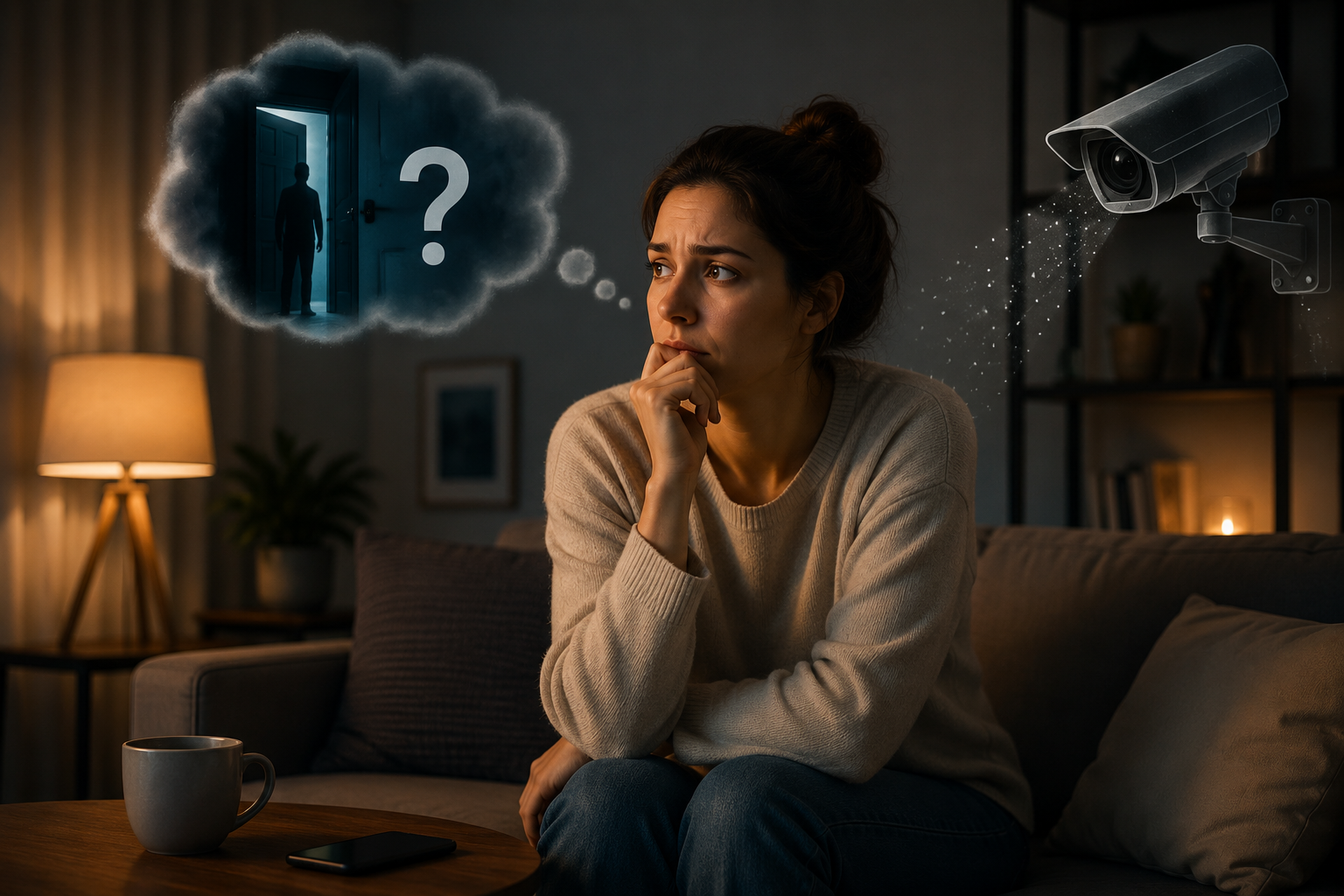
When the brain lacks information, it starts filling in the blanks.
It asks questions.
Creates possibilities.
Searches for explanations.
The result is often a cycle of mental discomfort that continues until certainty is restored.
This is why people:
Check that the door is locked twice
Re-read important messages
Refresh tracking information for a package
Look at a hotel room more carefully after hearing a strange noise
The brain isn't looking for danger.
It's looking for answers.
Most security concerns involve visible risks.
You can see an unlocked door.
You can see a broken window.
Privacy is different.
Privacy concerns often involve things people cannot see.
A hidden camera.
A GPS tracker.
An unknown recording device.
The uncertainty becomes the problem.
Because if something is hidden, how do you know it's not there?
This question sits at the centre of almost every privacy concern.
Many people who discover surveillance devices describe a similar experience.
Before the discovery, everything felt normal.
Afterwards, nothing felt normal.
Even familiar environments suddenly feel different.
Why?
Because trust changes.
The brain realises something existed outside its awareness.
And once that possibility becomes real, people start viewing their surroundings differently.
Not necessarily with fear.
But with awareness.
Think about everyday behaviour.
Most people:
Check flight times
Check hotel bookings
Check maps
Check weather forecasts
Not because they expect problems.
Because checking creates certainty.
Privacy checks work in exactly the same way.
The action itself often takes seconds.
The reassurance lasts much longer.
Something interesting has happened over the past decade.
People have gradually moved from trust to verification.
Not because trust disappeared.
Because information became easier to access.
People verify:
Online reviews
Product ratings
Accommodation photos
Restaurant recommendations
Privacy has followed the same pattern.
Many travellers now prefer to verify their surroundings rather than simply assume everything is fine.
These two ideas are often confused.
Paranoia assumes danger without evidence.
Awareness simply acknowledges possibility.
Checking a hotel room isn't paranoia.
Checking a rental vehicle isn't paranoia.
Looking around a new environment isn't paranoia.
It's the same principle as locking a front door before leaving home.
A small action that provides reassurance.
Interestingly, most people don't buy privacy tools because they expect to find something.
They buy them because they don't want to wonder.
That's an important distinction.
The goal isn't discovery.
The goal is certainty.
Modern devices such as the IGYA Intelligent Detector help users quickly verify whether hidden cameras, GPS trackers or surveillance devices are present.
For many people, the biggest benefit isn't what they find.
It's what they don't find.
Because nothing is often the best result.
Peace of mind is difficult to measure.
You can't hold it.
You can't photograph it.
You can't put it on a shelf.
Yet people spend enormous amounts of time and money trying to create it.
Insurance.
Security systems.
Travel locks.
Password managers.
The common theme is simple:
People feel better when uncertainty is reduced.
Privacy works exactly the same way.
The reason hidden surveillance feels so uncomfortable has very little to do with technology.
It's psychological.
People don't like unanswered questions.
They don't like uncertainty.
And they certainly don't like the feeling that something may be happening without their knowledge.
That's why privacy matters.
Not because people have something to hide.
Because people value certainty.
And sometimes, the fastest way to feel comfortable is simply knowing you've checked.